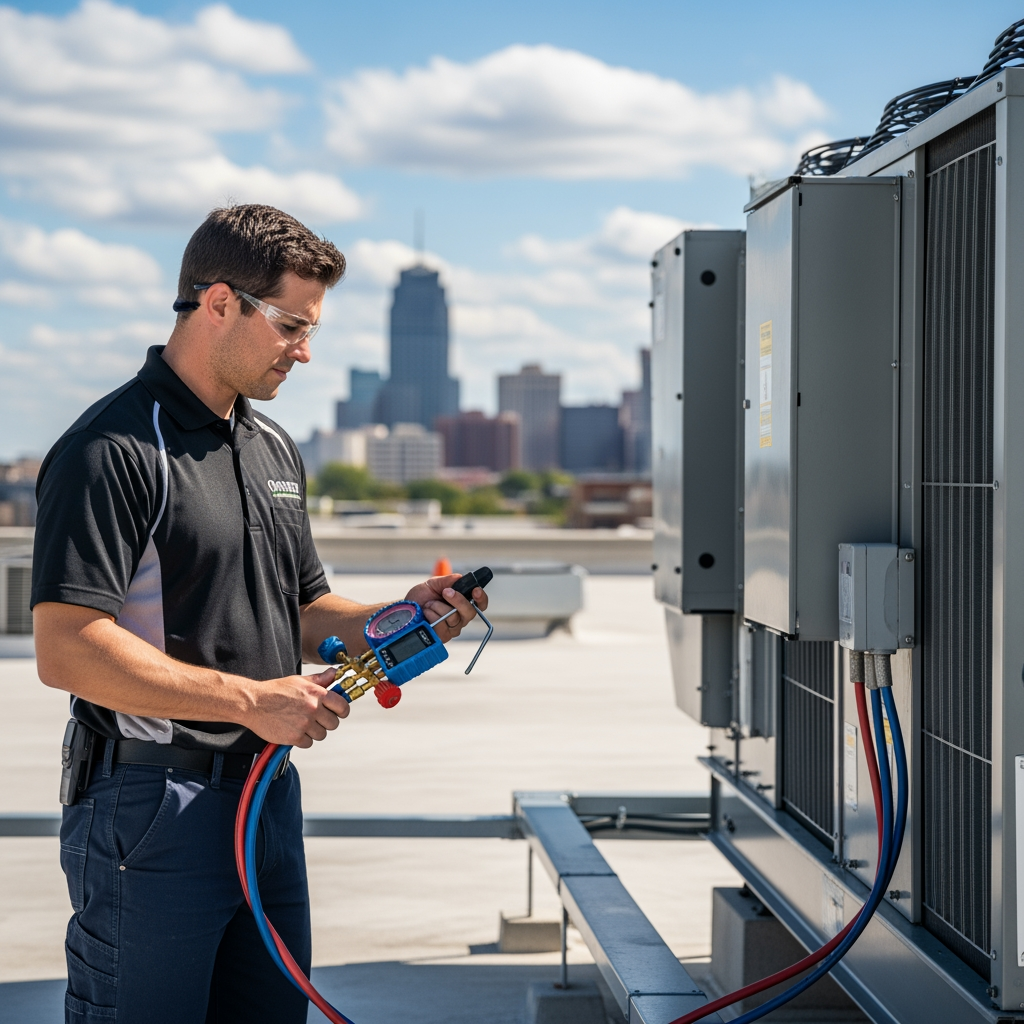
I work with building owners and facility teams across Dane County and beyond, and I’ve seen firsthand why Wisconsin commercial hvac systems are often the unsung backbone of comfortable, productive spaces. Efficient, reliable commercial HVAC and refrigeration keep workers safe, protect inventory, and control operating costs — especially here where seasons swing from sub-zero winters to humid summers. If you want a quick primer on what matters most for commercial systems in Sun Prairie, Madison, and neighboring neighborhoods, and real steps you can take today, keep reading. For national guidance on energy efficiency and federal programs that affect commercial HVAC upgrades, I also rely on resources from the U.S. Department of Energy for context and up-to-date policy trends: energy.gov.
Why commercial HVAC matters in Wisconsin
Commercial HVAC is different from residential work. The systems are larger, the risks are higher, and the stakes include employee comfort, product safety, and regulatory compliance. In Wisconsin, a reliable HVAC strategy reduces downtime during cold snaps, prevents frozen pipes and compressor failures, and manages humidity during the summer — all of which affect your bottom line. For retail spaces, restaurants, warehouses, and office buildings across Sun Prairie, maintaining consistent temperature and air quality helps protect inventory, prevents food spoilage, and creates a better environment for staff and customers.
Common challenges for commercial systems in this area
Local climate and building types create a set of recurring issues. I help clients anticipate these so they aren’t reacting to crises.
Seasonal stress and equipment aging
Hot summers and bitter winters push rooftop units, boilers, and chillers harder than moderate climates. Older equipment often fails at the worst possible time — usually during peak demand. Frost, ice, and condensation cycles shorten component life and increase service calls.
Refrigeration demands for food service and retail
Restaurants and grocery stores face strict temperature control needs. Small temperature swings can mean thousands of dollars in lost inventory. Commercial refrigeration must be maintained separately from HVAC systems and inspected regularly to avoid costly spoilage and code issues.
Indoor air quality and ventilation
Post-pandemic building standards put IAQ in the spotlight. Proper ventilation, filtration, and humidity control reduce absenteeism and improve comfort. Older ventilation setups may need retrofits to meet modern expectations without ballooning energy costs.
Top trends shaping commercial HVAC this year
There are a few trends I watch closely because they change how I advise clients in Sun Prairie and the surrounding region.
Electrification and heat pump adoption
Advanced cold-climate heat pumps have improved significantly and are a practical option for many commercial projects in Wisconsin. They can cut fossil fuel use and operating costs in buildings that are ready for electrification upgrades.
Smart controls and data-driven maintenance
Remote monitoring and building automation systems now let owners spot inefficiencies before they become failures. I recommend starting with simple fault detection and trending tools; they often pay for themselves through avoided emergency repairs and lower energy bills.
Focus on indoor air quality
Filtration upgrades, UV-C germicidal lights, and humidity control are common investments. These solutions are trending not just for health reasons, but because they improve occupant satisfaction and retention.
How I evaluate a commercial HVAC problem — a step-by-step approach
When I walk into a building, I use a simple checklist to diagnose issues quickly and build a brief action plan. You can use the same steps to prioritize work and budget for repairs or replacement.
- Inspect system age and maintenance history. Equipment records tell the story of past failures and recurring repairs.
- Measure current performance. I look at temperature spreads, suction/discharge pressures, and airflow to spot inefficiencies.
- Identify immediate risks. Leaks, electrical hazards, and critical refrigeration problems get top priority.
- Tie fixes to business impact. I recommend solutions that minimize downtime and protect revenue-generating operations first.
Preventive maintenance checklist for commercial systems
Regular servicing prevents most emergency calls. I recommend a seasonal maintenance plan that focuses on the systems that matter most to your operation.
- Biannual roof-top unit inspection: check belts, filters, refrigerant charge, and condensate drains.
- Quarterly refrigeration walkthroughs: monitor setpoints, door seals, and defrost cycles in kitchens and coolers.
- Annual ventilation and duct inspection: clean coils and verify economizer functions to optimize fresh air use in shoulder seasons.
- Filter program: use a filter schedule that balances IAQ needs with operating cost; consider MERV 8–13 depending on application.
When to repair vs when to replace
Decision-making around repair versus replacement comes down to three practical questions I always ask: How old is the equipment? What are repair frequency and cost? How well does the current system meet needs and codes? If a rooftop unit is more than 15–20 years old and repairs exceed 30–40% of replacement cost within a 12–18 month window, replacement is often the smarter investment. For refrigeration, repeated compressor or evaporator failures that threaten inventory should push the option toward replacement and upgraded controls.
Upgrading a rooftop unit or refrigeration system — realistic timeline
Planning is the biggest value driver for any upgrade. Here’s a timeline I use when advising clients so projects finish on time and on budget.
Pre-project (4–8 weeks): site survey, load calculations, and budget estimates. Secure permitting early if the project requires roof penetrations or electrical upgrades. Procurement and lead times vary, so order equipment as soon as specs are locked.
Installation window (1–5 days for unit swap; 1–3 weeks for complex refrigeration): for straightforward rooftop unit replacements the physical swap is fast, but roofing access, crane scheduling, and shutdown coordination can add time. For commercial refrigeration or walk-in cooler projects, allow time for product defrosting, temporary refrigeration solutions, and sanitation checks.
Commissioning and training (1–3 days): test the system, balance airflow, verify setpoints, and train onsite staff on new controls and basic troubleshooting.
Cost-saving strategies and incentives in Wisconsin
Upfront cost is often the biggest barrier to upgrades, but several strategies reduce net expense and improve payback.
Energy-efficient equipment and controls
Choosing high-efficiency compressors, variable-speed drives, and smart controls trims operating costs significantly over the life of equipment. I often show clients simple payback estimates that include both reduced energy use and lower maintenance costs.
Incentive and rebate programs
Federal and state programs increasingly support efficiency upgrades. Energy-efficient projects may qualify for tax credits, utility rebates, and other incentives. Working with a contractor who understands incentive paperwork can reduce the out-of-pocket cost and accelerate ROI.
Quick wins you can implement this month
If you’re responsible for facilities in Sun Prairie or the wider Madison area and you want immediate impact without a major capital expense, try these steps I use with clients all the time.
- Standardize filters and track replacement dates. Missing filter changes is a low-cost problem with big energy consequences.
- Set up basic remote alerts for critical temperatures. A low-cost sensor and alert system prevents spoilage in refrigeration and avoids frozen pipes in winter.
- Schedule a mid-season tune-up. Catching a small refrigerant leak or a failing fan motor early avoids emergency downtime.
Common questions I get from local owners
How do I lower winter energy bills without sacrificing comfort?
I recommend calibrating setbacks and using smart controls that learn building occupancy patterns. Use zoning to avoid heating or cooling unoccupied spaces. Regular maintenance improves efficiency and reduces run times.
How often should refrigeration be inspected?
For kitchens, coolers, and freezers I advise formal inspections at least quarterly, with daily temperature logs maintained by staff. For larger systems, add monthly checks of compressor amps and condenser cleanliness.
Is retrofit electrification worth it?
Retrofitting for electrification and heat pumps depends on existing infrastructure and energy costs. I run a lifecycle cost model to compare current fuel bills, projected electricity rates, and available incentives. In many commercial cases, electrification makes sense over a 10–15 year horizon.
How I help clients in Sun Prairie and nearby neighborhoods
I focus on clear communication, predictable scheduling, and documentation. I help clients plan budgets, select equipment, manage permits, and coordinate with property managers and tenants for minimal disruption. Whether it’s a one-time repair or a multi-phase upgrade across several properties, I treat each project like an investment in the building’s future.
Final thoughts and next step
If you’re ready to reduce risk, cut energy costs, and bring your commercial HVAC or refrigeration systems up to modern standards, I can help you map a plan that matches your timeline and budget. For a local team that understands Sun Prairie, Madison, and the surrounding communities and can handle everything from preventive maintenance to complex refrigeration projects, consider reaching out to NexTech NA to discuss options and get a site review scheduled.