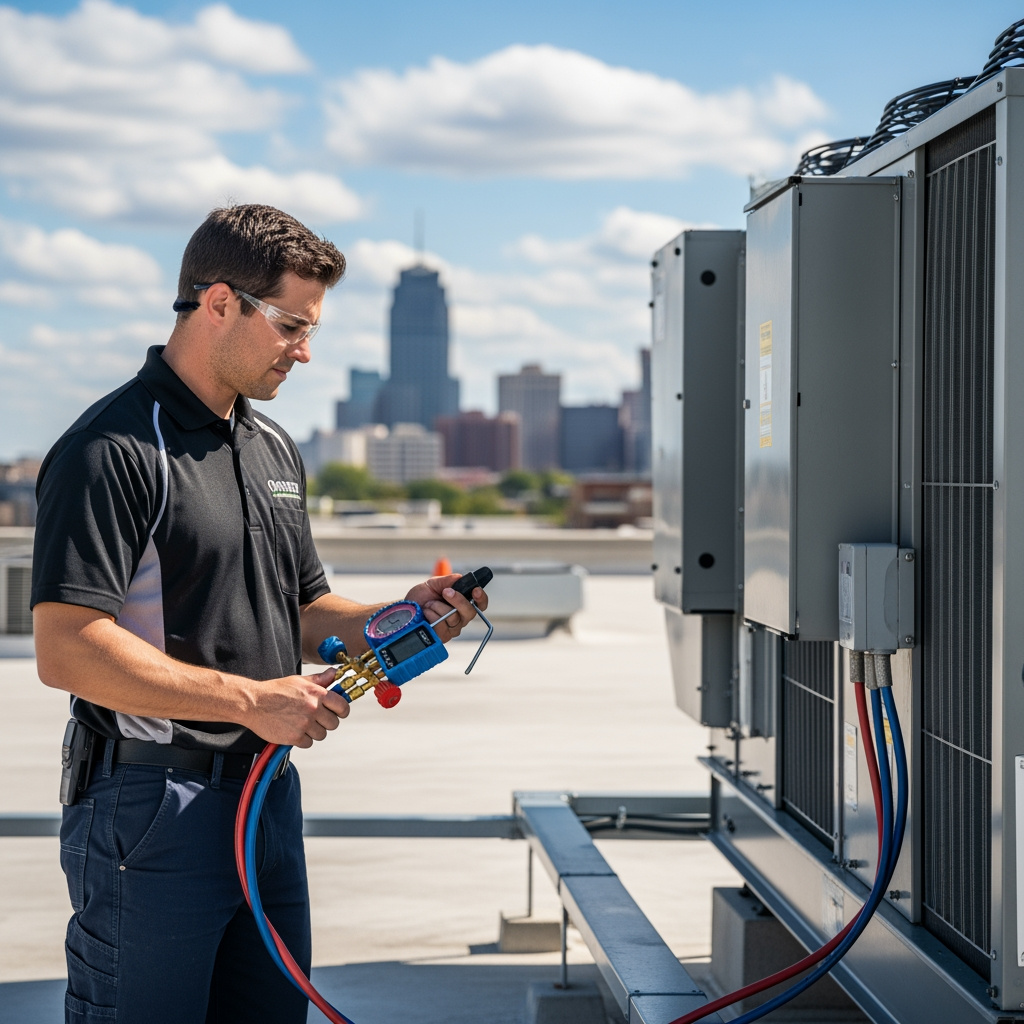
I’m often asked how businesses in and around Sun Prairie can get smarter about Wisconsin commercial hvac systems — and what really matters when uptime, comfort, and energy bills are on the line. I’ve worked with property managers and facility teams across the Madison area for years, and I lean on practical guidance and trusted resources like the U.S. Department of Energy to shape decisions about efficient heating, cooling, and ventilation (Energy.gov). In this post I’ll walk through the trends, the warning signs, and the steps you can take today to make your commercial HVAC more reliable and cost-effective.
Why commercial HVAC matters for Sun Prairie businesses
Commercial HVAC drives both occupant comfort and your bottom line. In Wisconsin, where seasonal swings are large, systems that aren’t tuned for the local climate add extra operational risk. I’ve seen units overworked in both winter and summer, leading to unexpected downtime and repairs. For office buildings, retail spaces, restaurants, and light manufacturing facilities, HVAC issues show up as unhappy occupants, higher energy bills, and sometimes, code or permit headaches when ventilation and air quality aren’t up to standards.
Top trends reshaping commercial HVAC right now
Two big trends are changing how I recommend upgrades and maintenance for clients in the city and surrounding neighborhoods. First is electrification: heat pump technology and hybrid systems are getting better at handling cold-weather loads, making them practical for more commercial applications. Second is smart controls and building automation: real-time monitoring and demand-response strategies cut wasted runtime and improve responsiveness across multiple units. Both trends help reduce costs and lower carbon footprints over time.
Why these trends matter locally
In this area, upgrading controls and planning for partial electrification can be especially valuable because older buildings often have legacy systems that run constantly. Smart upgrades let you schedule pre-conditioning, adjust zones, and reduce simultaneous heating and cooling — all of which matter during shoulder seasons and the hottest summer spells that strain rooftop units.
Common problems I help clients solve
When I visit a commercial site, problems typically fall into a few categories: poor maintenance history, mismatched equipment capacity, control issues, and indoor air quality complaints. These issues often multiply: a dirty condenser coil can increase run time, which worsens filter loading and reduces airflow, which then triggers occupant complaints. Addressing the root cause — not just the symptom — is where the biggest savings and reliability gains come from.
Watch for these warning signs
- Frequent short-cycling or equipment that runs constantly without reaching setpoints.
- Uneven temperatures across zones or floors, with persistent hot or cold spots.
- Higher-than-usual energy bills without a change in occupancy or hours.
- Unusual noises, odors, or visible leaks around rooftop or mechanical rooms.
Energy-saving upgrades that pay off
You don’t need to replace everything to get meaningful savings. I always start with control optimization and preventive maintenance. Upgrading thermostats to networked controls, adding demand-control ventilation in kitchens and conference areas, and replacing worn belts and seals cut waste immediately. For capital projects, assess high-efficiency rooftop units, variable-speed drives on fans and pumps, and heat-recovery solutions that reclaim energy from exhaust streams.
How to prioritize upgrades
Start with the low-cost, high-impact items: calibrate controls, clean coils and filters, and seal ductwork where leaks are obvious. Next, consider projects that pay back in three to five years — variable fans or upgraded economizers for instance. Finally, evaluate longer-term investments like electrification or major equipment replacements that align with your sustainability goals and available incentives.
Indoor air quality and occupant health
Indoor air quality (IAQ) remains a priority for building owners, especially in shared spaces. Improved filtration, proper ventilation rates, and targeted air-cleaning technologies reduce complaints and can help lower absenteeism in workplaces. I recommend combining better filtration with increased outdoor air when possible, while balancing energy impact with smart scheduling and heat recovery where feasible.
Practical IAQ actions you can take now
Small changes often make a big difference. Replace filters on schedule with higher-rated media suited to your HVAC system, verify ventilation rates during occupied hours, and use CO2 monitoring in densely occupied zones to guide ventilation strategies. These steps reduce immediate health complaints and build confidence among occupants.
Seasonal maintenance checklist for commercial systems
Consistent maintenance is the single best way to avoid expensive emergency repairs. I recommend a seasonal plan tailored to your equipment and usage pattern. Regular visits let technicians catch small issues before they become system failures, and they also provide opportunities to tune controls for seasonal efficiency.
- Inspect and clean condenser and evaporator coils to restore heat transfer efficiency.
- Check belts, motors, and bearings; lubricate and replace worn parts to prevent failures.
- Verify thermostat and BAS schedules; test sensor accuracy and calibrate controls.
- Clean and change filters; inspect ductwork for leaks or moisture issues.
Emergency planning and rapid response
No one wants a tenant call at 3 a.m. about a failed rooftop unit. That’s why I encourage teams to have a clear emergency plan: an on-call contractor, a documented sequence of steps for quick isolation, and a spare-parts list for the most critical components. Prioritize redundancy for systems that serve mission-critical areas such as commercial kitchens, server rooms, or production lines.
Steps for faster recovery
When downtime happens, speed matters. Document the system layout, keep service histories accessible, and ensure the on-site staff knows basic isolation and temporary cooling or heating measures. A proactive contract with guaranteed response times often costs less than repeated emergency calls and lost business during extended outages.
Choosing the right commercial HVAC partner
Picking a contractor is as important as picking equipment. I look for teams that combine strong technical skill with transparent pricing and clear communication. The right partner will do a full assessment, propose phased upgrades tied to ROI, and offer preventive maintenance packages that fit your building’s operating rhythm. In Sun Prairie and the greater Madison area, local knowledge of code, permit requirements, and utility incentives also matters.
Questions to ask potential contractors
Before you sign a service agreement, ask about their experience with similar buildings, their emergency response policy, and whether they provide documented energy performance projections for proposed upgrades. Request references and examples of past projects so you can compare outcomes and timelines. A good contractor will welcome these questions — they know transparency builds trust.
Real-world examples and quick wins
In my work with storefronts and light industrial sites, small investments often deliver the fastest value. For example, calibrating economizers and installing variable-frequency drives reduced runtime on rooftop units and cut energy use by noticeable margins without full equipment replacement. Likewise, switching to higher-MERV replacement filters and scheduling demand-control ventilation in conference zones improved IAQ and occupant comfort without major cost.
Next steps: actionable plan for facility teams
Here’s a short roadmap you can follow this quarter to stabilize performance and build toward larger upgrades. First, schedule a comprehensive inspection and get a clear report listing critical items and recommended timelines. Second, implement the seasonal maintenance items we covered to remove easy risks. Third, prioritize one mid-range upgrade such as smart controls or a variable-speed drive that delivers measurable savings within a year.
Conclusion and how to get help
If you want a local team that understands commercial HVAC needs in Sun Prairie and the surrounding communities, consider reaching out for a site assessment and a clear, no-nonsense plan. The team at Nextech North America can inspect systems, outline short- and long-term options, and help put a seasonal maintenance and emergency response plan in place so your building performs reliably year-round.